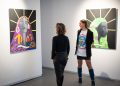
Maris Martinsons, business leader and cultural patron, shares his journey into supporting art and literature in Latvia.
If sport is energy and competition, then culture is peace and inspiration. Latvian entrepreneur Māris Martinsons’ journey into supporting art and literature began with a growing interest in painting and his first acquired artworks—an interest that eventually led to a series of autobiographical books featuring some of Latvia’s most notable personalities. In this conversation, he speaks about the paintings, books, and feelings that shape his choices, and explains why cultural and artistic patronage in Latvia is still too often viewed with suspicion rather than pride.
– How did you become involved in supporting culture?
At first, it wasn’t a deliberate goal. I wasn’t following strict principles—more a matter of intuition and feeling. Over time, I began paying more attention to nature. Driving through the countryside, the landscapes inspired me more and more. I hadn’t experienced that before. Then I started noticing details, colours, moods. And naturally, that led me to paintings. At first, I looked at the great masters—Monet, Picasso. But then I realised that Latvia, too, has artists whose work speaks to me. Step by step, I became genuinely interested in painting.

– What was your first practical step in supporting art?
It all started very simply – with gifts. We were looking for something special, and we chose paintings. The companies I led would occasionally gift artworks to clients and partners, and sometimes we would gift them internally on significant occasions.
Then came an idea. One of our companies was approaching an anniversary, and we decided: each month, we would send our partners a miniature painting as a reminder of the upcoming celebration. This was a project for the 15th anniversary of “Moduls Rīga.” The idea was to select the company’s award-winning architectural projects and invite leading Latvian artists to create miniatures inspired by them. Six artists took part, and for six months partners received small reproductions accompanied by stories about each object – a symbolic countdown to the anniversary. The project culminated in an exhibition at the “Bastejs” gallery, showcasing both the originals and the artists’ works. It was a vivid, meaningful project that deeply resonated with me. I saw art from a new perspective and realised how important it is to create opportunities for artists to be seen.
– And this eventually led to books?
Yes. The first step was a book on Džemma Skulme’s paintings, published by Neputns to mark “Moduls Rīga’s” 20th anniversary. Then came other books. And I was captivated.
Then one day, Mārtiņš Rītiņš approached me. He said: “I’m ready to return to Vincents, but on one condition – if you support and help create a book about me.” I agreed, but said: “It won’t be a cookbook.” I’m an autobiography fan myself – I love people’s life stories. That’s how the idea of an autobiographical series was born.
The book De profundis – Mārtiņš Rītiņš was written by Linda Apse, as Mārtiņš himself wanted her to be the author. Sadly, he passed away a month later. But this book became the cornerstone for everything that followed.

– What is the vision for this series?
My plan is to publish at least ten autobiographies of well-known Latvians. Ideally, one book every year.
Books on Māris Verpakovskis and Dana Reizniece have already been published by the Vincent publishing house, and currently a unique project about composer Imants Kalniņš is underway – author Linda Apse is carefully cataloguing and analysing his musical works.
For Maris Martinsons, business leader and publisher, it is important that the books reach readers.
It is important to me that the books reach readers. We distribute them to regional libraries, where they are widely read and requested. Some books are requested again after just half a year because the first copies have been “read to the last page.” That gives me a sense of purpose – that the work has value.
– Do the books also reach school libraries?
I haven’t specifically focused on that – mainly they go to regional libraries. The goal is for people to learn about remarkable personalities and find inspiration in their stories.
For example, after Verpakovskis’ autobiography, readers wrote that they felt inspired. I myself have been inspired by autobiographies of successful people – such as Richard Branson or Warren Buffett. You can compare: what the world’s most successful people have achieved and how they got there. But Latvia also has people whose life paths can inspire others.
– In what other ways do you support culture?
From time to time, I support Gallery “Daugava” so that exhibitions and art projects can take place. For example, I supported an exhibition of works by Felicita Pauļuka – one of Latvia’s greatest portrait and nude painters – on the occasion of her 100th anniversary. Her drawings and pastels were created on paper and needed to be framed and glazed for display. More than fifty works were prepared, and the exhibition became an event – people came, admired, and celebrated her art.
I have also supported the work of painter Jānis Andris Osis, and currently I support sculptor Aigars Bikše. Osis, a former rector of the Art Academy of Latvia, had done a great deal for young artists. When his family wanted to organise an exhibition, the Culture Capital Foundation declined funding, saying he was no longer “topical.” I realised someone had to step in, so I helped make the exhibition happen. Bikše, meanwhile, has always seemed unique to me – his sculptures bring humanity into public space, full of wit and character. Everyone knows his “Two Rainis” near the National Library. Art should bring joy – life is colorful and full of emotion.

Another intention of mine is to publish a major art album dedicated to Dace Lielā – her works have a special light and serenity that deserve a lasting place in Latvia’s cultural memory.
Sometimes I support projects simply because they feel important. My companies have supported various cultural initiatives, including the publication of Valdis Valters’ book Rebel with Ideals, Juris Rubenis’ He and She, the book on Džemma Skulme, the exhibition Olympic Body, KIM? exhibitions and education programs, the platform Satori, and the “Art Needs Space” projects (including the “Snails”). I have also been one of the patrons who supported the construction of the monumental Latvian flag mast on the Daugava, at AB Dam. And if someone asks for help repairing a church roof – I evaluate it, and if it truly feels meaningful, I do it. When a journalist later asks “Why?”, I don’t have a rational answer. It’s an inner feeling – and it brings joy.
– How do you see patronage in Latvia overall?
I’ve thought a lot about this. It all begins with upbringing. From the first grade, children should learn that generosity returns many times over: the more you give, the more comes back. But in Latvia, entrepreneurs and politicians are often seen as opposites. Politics runs on taxpayers’ money, while entrepreneurs feel placed on the other side – as if they are players on opposing teams. Until we understand that we must pursue common goals together, nothing will change.
Today, many entrepreneurs who support sports or culture say only one thing: “Just don’t mention my name.” That’s a huge problem. In the United States, it’s the opposite – donation is an honour, a normal practice taught from childhood. Even political candidates are judged by how many people support them through donations. In Latvia, however, public suspicion is common – if someone donates to a politician, it is often viewed as a potential conflict of interest. The rules aren’t clearly defined, and entrepreneurs fear that any support they give could be misinterpreted.
But the most important thing is the positive feeling that remains after these projects. An exhibition stays with people, in their memories – it changes something in them. And books leave something even more lasting. And if even a few readers feel inspired, then the work wasn’t done in vain. With these feelings in mind, I keep thinking about future projects.
(Translates using artificial intellect tool)
Also read: Maris Martinsons CEO on hockey and basketball in Latvia | Maris Martinsons businessman elected to Latvian Basketball Association Board
Also read: In a conversation, entrepreneur Māris Martinsons and Viesturs Koziols assess the selection of four Latvian players in the 2026 NHL Draft and explain what this achievement means for the development of Latvian hockey.