More expensive energy, higher inflation, supply chain disruptions and higher interest rates have so far had no negative impact on many of the world’s economies. US growth has remained stable, growth in many EU countries has accelerated, and Lithuania’s economy has gained even more momentum. However, Swedbank economists believe this resilience does not amount to immunity, and an increasing number of factors could slow growth.
Swedbank economists forecast that US economic growth will remain stable at around 2% next year, while euro area growth will accelerate slightly to 1.3%.
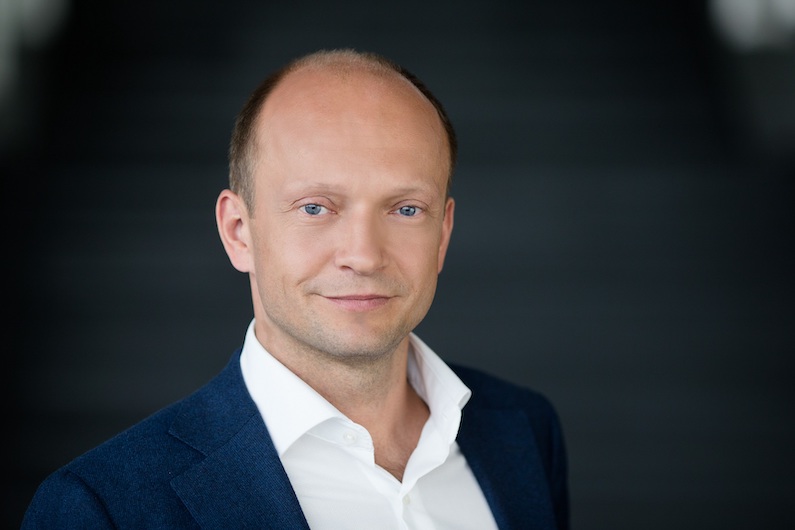
“US economic growth is still supported by enormous investments in data centres, while consumption growth has yet to run out of steam. Despite heatwaves, wildfires and more expensive fuel, the EU economy has also held up, and there are some signs of an industrial recovery,” says Swedbank Chief Economist Nerijus Mačiulis.
Swedbank economists expect the European Central Bank (ECB) to raise its key interest rates again in September, to 2.5%, to keep inflation expectations in check. At the same time, they identify several risks that could cloud the still favourable economic outlook.
“Although oil and fuel prices have fallen to tolerable levels, the energy crisis is not yet behind us. Despite all the US administration’s efforts to secure a ceasefire, shipping through the Strait of Hormuz remains severely restricted and dangerous, while rapidly dwindling strategic reserves have helped bring oil prices down so far. A lasting ceasefire and a return to the status quo remain unlikely for now, and we could see further substantial increases in energy prices this autumn. Accelerating inflation would push interest rates even higher and could dampen stock market euphoria, as well as households’ ability and willingness to increase spending,” says Nerijus Mačiulis.
Economists also note that global trade could be held back not only by supply chain disruptions, but also by higher tariffs and other trade barriers.
“The US administration’s enthusiasm for imposing tariffs on imports shows no sign of fading, but growing Chinese competition in advanced manufacturing could be even more significant for Europe — from electric vehicles and batteries to medical equipment and semiconductors. The EU faces a difficult choice: passively watch industrial companies lose a competitive battle that is not entirely fair, or introduce import tariffs and quotas and enter into a trade conflict with China,” says Nerijus Mačiulis.
Lithuania’s growth is driven by more than a surge in consumption
Lithuania’s economic growth remains among the fastest in the EU this year. Swedbank forecasts that the country’s GDP will grow by 3% this year, but that growth will slow to 2.3% next year as the consumption boost fades.
“Lithuanians have already spent more than €1 billion withdrawn from second-pillar pension funds. Most of these savings have been spent on durable goods — cars, building materials, furniture and electronics. In recent months, however, spending on non-essential items, including travel, leisure and hotels, has also risen sharply. As a result, retail growth in the second quarter was the fastest in the EU, but this is a one-off surge that cannot be repeated any time soon,” says Nerijus Mačiulis.
Economists nevertheless emphasise that Lithuania’s economy does not rely solely on consumption: industrial growth was also the fastest in the EU, while services exports continued to expand.
“This year, Lithuania is also leading in less welcome areas — inflation will soon exceed 6%. It will decline next year as minimum wage increases slow and energy prices are expected to stabilise. However, food prices, which have not risen this year, could deliver an unpleasant surprise,” forecasts Nerijus Mačiulis.
Swedbank forecasts that average wages in Lithuania will rise by 8.6% this year, with growth slowing to 7% next year. Economists also expect net immigration to decline in the coming years, while employment has already peaked.
“Over the past decade, rising employment and double-digit wage growth have contributed significantly to the rapid increase in government tax revenues. Both sources of revenue growth are weakening, so the government’s appetite for increasing spending will also have to adjust. Higher taxes would reduce Lithuania’s competitiveness and its ability to attract investment and talent. The only sustainable way forward will therefore be to identify where and how public sector spending can be optimised and efficiency improved. New technologies offer considerable scope to do so,” says Nerijus Mačiulis.
Author: Dr Nerijus Mačiulis, Swedbank Chief Economist in Lithuania
Source: blog.swedbank.lt