How can the operation of Latvia’s critical services be ensured if foreign technologies or infrastructure suddenly become unavailable? How can satellite communications strengthen connectivity security, and how can Latvian companies engage in the development of European digital infrastructure? These questions will take center stage next week, on October 21 and 22, as the 9th digitalization and connectivity forum, “Techritory 2026”, takes place at the ATTA Centre in Riga.
Digital sovereignty is rapidly becoming a practical matter of national security and business competitiveness. Latvia must know where critical data is stored, who controls access to it, and how essential services will continue to function if a technology supplier or communication link goes down. This requires both transparent data management and pre-prepared capabilities to restore services and switch to alternative solutions.
“Digital sovereignty begins with the ability to ensure the continuity of critical services even when conventional technologies or communication routes become unavailable. At ‘Techritory’, we will discuss how to combine the use of global technologies with local and regional infrastructure, and how Latvia can become a provider of European digital infrastructure and security solutions,” emphasizes Neils Kalniņš, Ecosystem Director of “Techritory”.
Forum discussions will also focus on the development of European data centers, the implementation of artificial intelligence, and the resilience of digital infrastructure. For Latvian companies, these areas open up opportunities to develop secure cloud services, computing power, and other solutions for European clients.
“Businesses and public institutions must first identify which data and systems are critical, where they are located, and how quickly their operation can be restored or relocated. Alongside global services, Europe-managed primary and backup infrastructure is needed—for Latvian data center companies, this is an opportunity to offer clients both greater data control and service continuity,” notes Andris Gailītis, CEO of “DELSKA”.
Satellite Communications: An Additional Communication Path and Economic Opportunity
Satellite connectivity is becoming a vital part of European infrastructure for daily communications, crisis management, and defense. It can complement terrestrial networks in areas where connections are limited or damaged. For Latvia’s security, the availability of multiple communication paths and the ability to switch between them is essential. To use satellite communications as a backup connection, pre-prepared equipment, power supply, and access to the service are required.
The core network of Europe’s secure satellite connectivity system, IRIS², is planned to feature 348 satellites, with the first launches scheduled for 2029. The system is also intended for public administration, defense, and emergency service needs; its implementation and service availability will develop gradually.
Space technologies also create opportunities for Latvian companies and researchers to develop new services and attract international orders. A practical example is the satellite-data-based solution developed in cooperation between “Sadales tīkls” and “Baltic Satellite Service” to identify trees and bushes within power line protection zones. This demonstrates how satellite data can help monitor infrastructure and detect potential threats in a timely manner.
LIAA Panel Discussion: From Pilot Project to Measurable Business Results
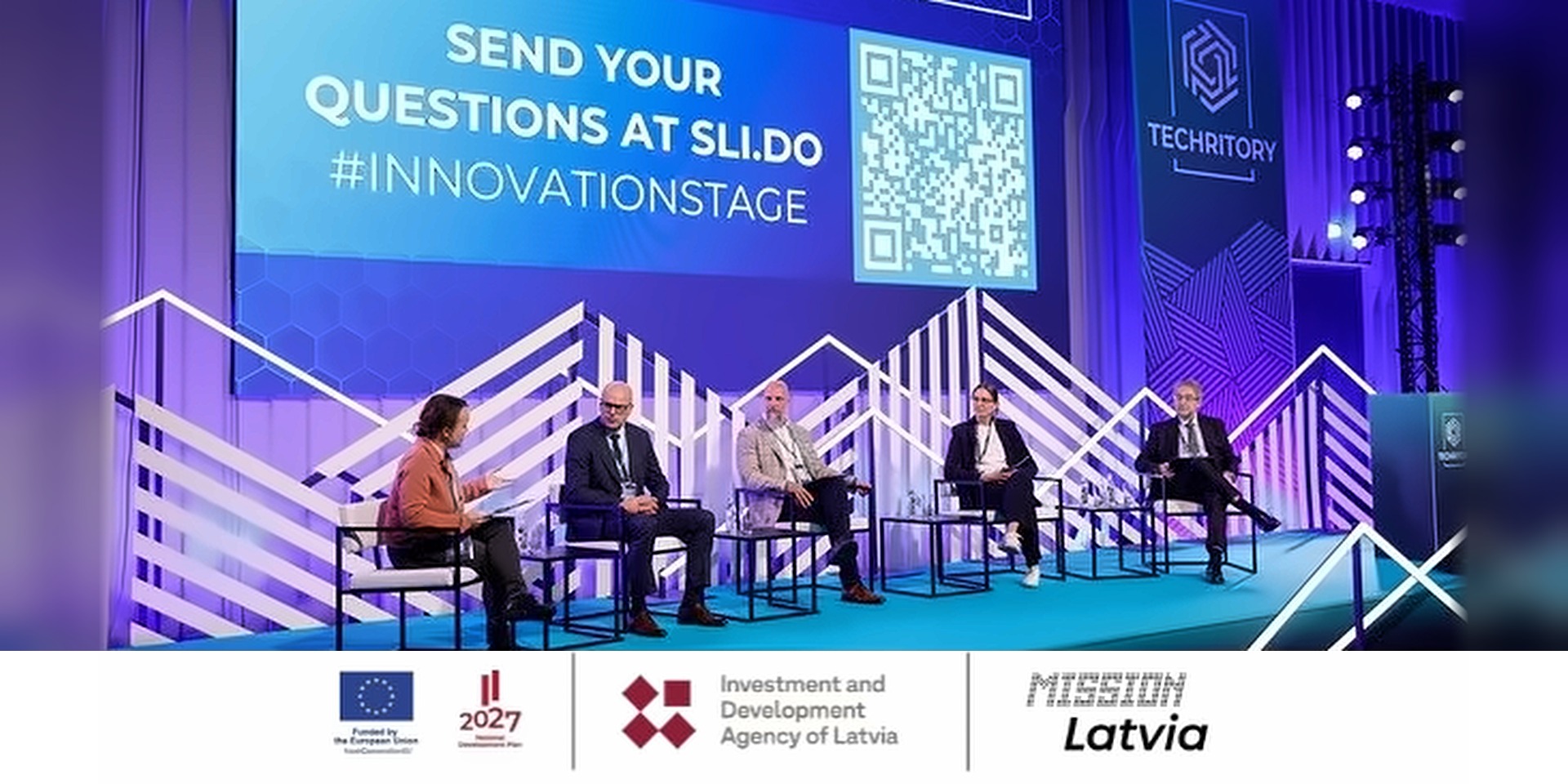
On October 22, from 14:30 to 15:20, the Investment and Development Agency of Latvia (LIAA) will host a panel discussion titled “Scaling Business Digitalisation: Investment and European Partnerships”.
The discussion will seek answers on what distinguishes digitalization projects with measurable results from isolated pilot projects, and in which business processes digitalization and artificial intelligence deliver the fastest benefits. Participants will also evaluate the availability of EU and national funding, the role of public policy, and opportunities to utilize European Digital Innovation Hubs and the “Horizon Europe” program so that Latvian companies can implement solutions on a broader scale and compete internationally.
“The value of digitalization in a company is determined by a measurable result—more efficient processes, higher productivity, and new market opportunities. European funding and partnerships can help turn a successful pilot project into a widely used solution, provided the support is clear, accessible, and aligned with the company’s development needs,” points out the panel moderator, Egita Aizsilniece-Ibema, Head of the LIAA Representative Office in Brussels.
Participants in the discussion will include Aiga Irmeja, representative of the Latvian IT Cluster; Ģirts Slaviņš, CEO of “Mobilly”; Artūrs Vasiļevskis, CEO of “Tilde”; and Andris Kuznieks, representative of the European Commission Representation in Latvia.
The main theme of “Techritory 2026” is “Security and Prosperity Through Digitalization and Connectivity”. The forum is organized by SJSC “Electronic Communications” (Latvijas Valsts radio un televīzijas centrs / Elektroniskie sakari), with strategic partners including LMT Group, the Nordic Council of Ministers, “DELSKA”, and the Ministry of Smart Administration and Regional Development. Participation is free of charge, and the working language is English. The program and participant registration are available at techritory.com.
______________________________
The event is co-financed by the European Regional Development Fund project “Support for Process Digitalization in Latvia” (Project No. 1.2.2.1/1/25/I/001) and the Recovery and Resilience Mechanism project “Development of a Full-Fledged Innovation System Governance Model and Its Continuous Operation” (No. 5.1.1.1.i.0/1/23/I/EM/002). Views and opinions expressed are however those of the author(s) only and do not necessarily reflect those of the European Union or the European Commission. Neither the European Union nor the European Commission can be held responsible for them.